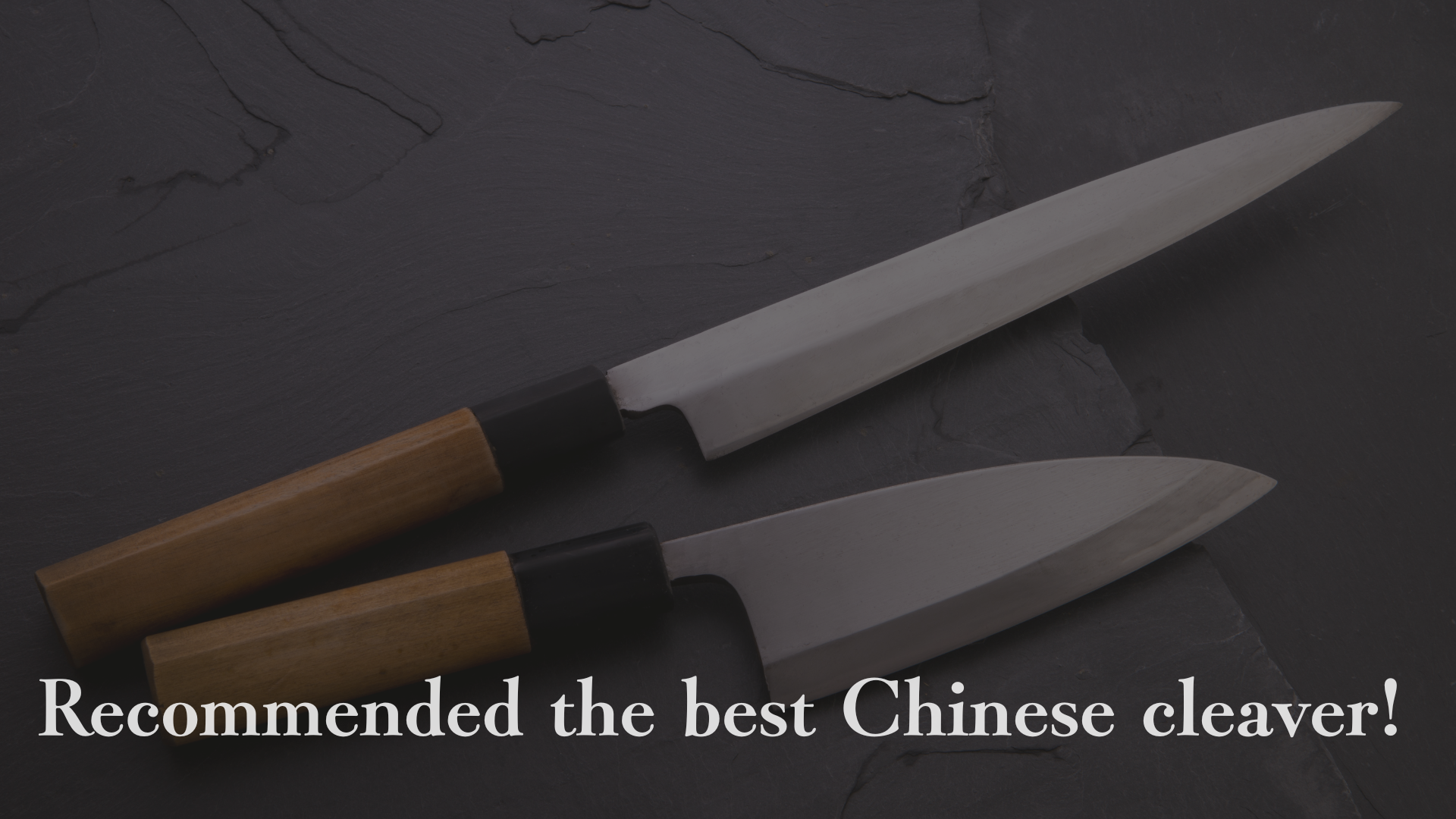
As the name suggests, Chinese knives are widely used in Chinese cooking.
It is characterized by its large rectangular blade, which is used not only for cutting but also for mashing, scooping, etc., as an all-round kitchen knife capable of performing a variety of tasks.
In this article, we would like to introduce the features and main uses of Chinese knives, and then tell you about our recommended Chinese knives.
Characteristics of Chinese knives
First of all, we would like to tell you about the features of Chinese knives.
Large rectangular blade
A Chinese knife is characterized by its wide, square-shaped blade.

Unlike the so-called Japanese Santoku knife, the height (width) of the blade is large, making it easy to use for purposes other than “cutting” as a kitchen knife, such as transferring cut food directly on the blade to a pan, or crushing garlic or ginger.
Thickness and weight vary depending on the type.
Chinese knives” can be broadly categorized into “for vegetables,” “for meat,” “thick blade for cutting bones,” and so on.
For example, a knife for vegetables (rape knife) has a thin and light blade edge and is suitable for delicate cutting and quick work. On the other hand, those with thick blades for handling meat with bones are heavy and can be used vigorously, such as for smashing bones.
Double-edged knives are the basic type
Some knives are single-edged, like Japanese knives, but most Chinese knives are double-edged (symmetrically sharpened on both sides).
Because they are double-edged, they are easy to use for both right- and left-handed people, and can be used for a variety of cuts.
Column: History of Chinese Knives
The prototype of the Chinese knife is the cài dāo, a knife that has existed in China since ancient times.
Origin
The cài dāo means “knife for cutting vegetables,” and its history is said to be thousands of years old. In China, the culture of using a single knife to cut vegetables, meat, fish, and sometimes even bones is deeply rooted, and Chinese kitchen knives developed from this culture.
Introduction to Japan
Although Chinese food was not introduced to Japan in earnest until the Meiji and Taisho periods, the Chinese knife itself was brought to Japan naturally as Sino-Japanese exchanges deepened. As the number of Chinese restaurants began to increase after World War II, Chinese knives gradually spread as “for professional chefs,” and later became available to ordinary households as well.
How to use a Chinese knife
Next, we will tell you how to use a Chinese knife. A Chinese knife can perform the processes necessary for preparing Chinese food.
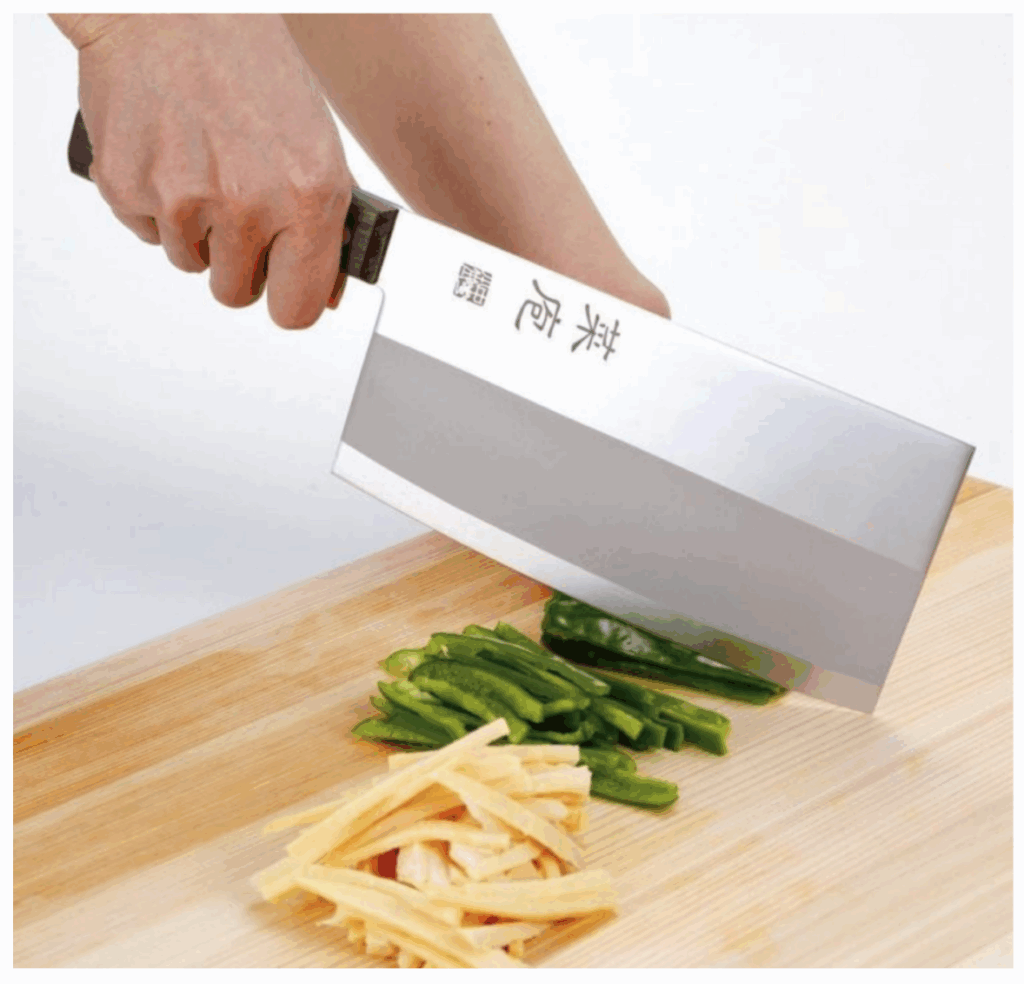
Cutting vegetables
A Chinese knife is suitable for cutting vegetables quickly and in large quantities because of the large surface area of the blade and the large contact surface with the cutting board.
Preparing meat and fish
Thin-bladed Chinese knives (na-knives) are mainly used for vegetables, but slightly thicker ones are also used for cutting meat and fish. It is possible to perform tasks such as cutting off sinews and removing fat with a single knife.
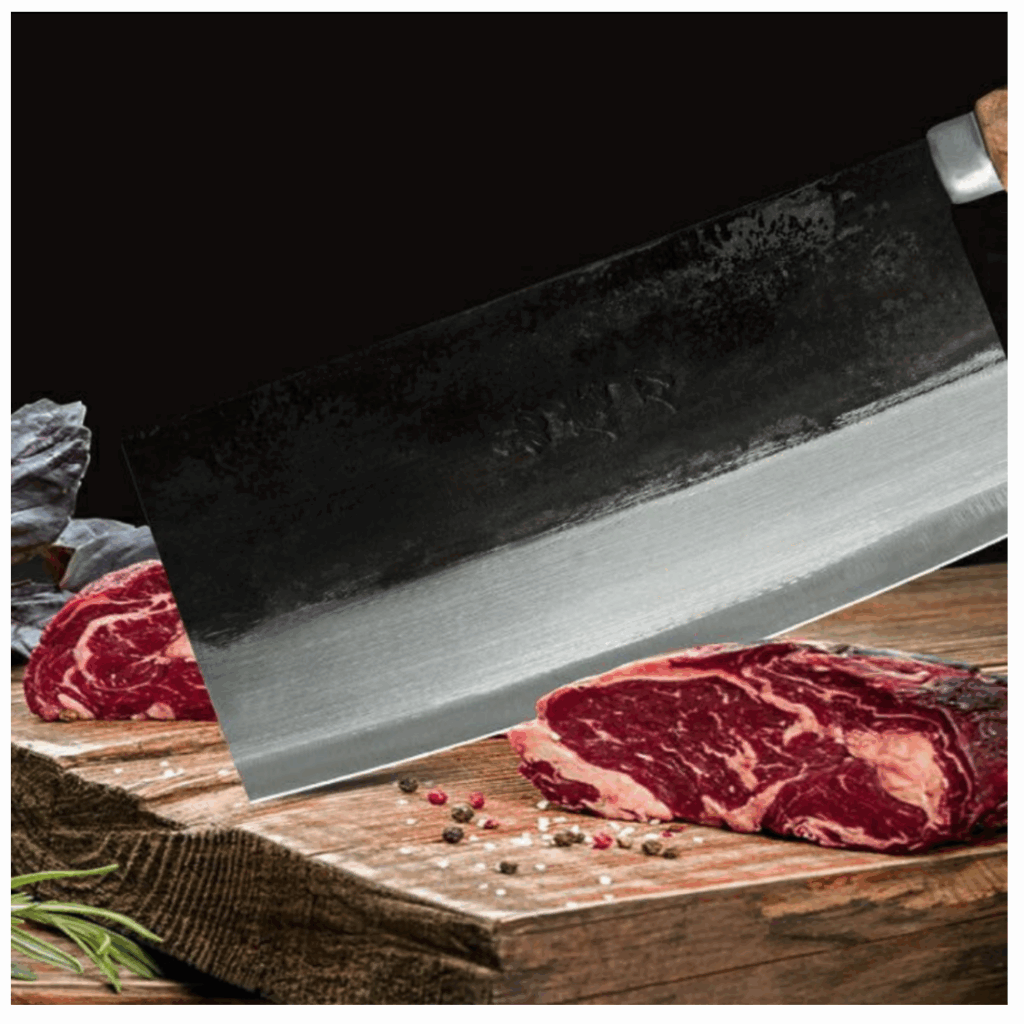
However, if you need to cut bones, you can use a heavier and thicker Chinese knife as a “bone knife” (so-called “bone knife”), and so on, depending on the purpose.
Crushing and Pounding
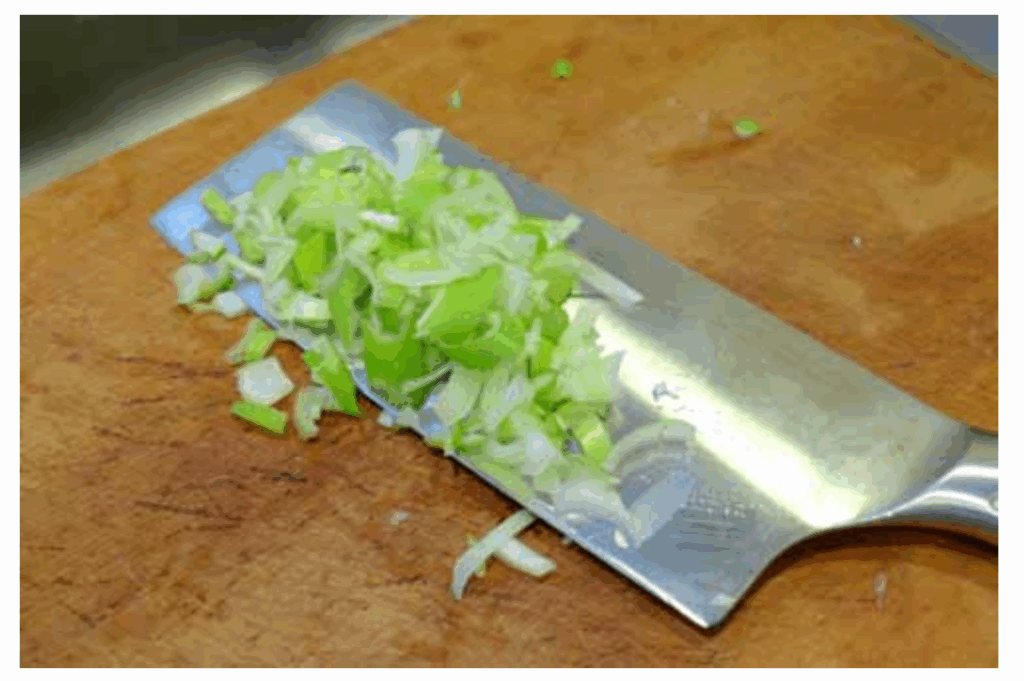
The wide blade of a Chinese knife is also useful for mashing garlic, ginger, and the white parts of green onions to release their aroma.
By pressing or tapping the belly (side) of the blade against the food, you can smoothly prepare the food to be crushed or dressed.
Scooping and carrying
The wide blade tip allows for efficient transfer of cut ingredients directly to pots and pans or plates. This also has the advantage of eliminating the need for another tool when transferring food from the cooking table to the pot or pan.
Don’t you need a Chinese knife for home use?
A concern for homeowners may be whether or not a Chinese knife is necessary.
The following is a comparison of cases in which a Chinese knife is “useful (necessary)” and “unnecessary (not necessary)” in the home. Please take into account your own cooking style and kitchen environment.
| Item | A Chinese knife is necessary | Do not need a Chinese knife |
|---|---|---|
| Cooking frequency/content | – Cook Chinese food in earnest at least 3-4 times a week – Frequent opportunities for vigorous cutting of meat on the bone or chopping hard ingredients (pumpkin, radish, etc.) into chunks – Frequently make recipes with a lot of beating and crushing processes, such as crushing and stir-frying garlic and ginger | – Chinese food only once or twice a week, or do not use meat with bones very often. – There are few occasions in which you have to use a knife to “pound and slice”. – Japanese or Western cuisine is the main food in daily life, and a general-purpose knife such as a santoku knife is sufficient for the job. |
| Ingredients Cutting method | – To cut up chicken meat with bone at once, or to prepare around the bone of spare ribs, etc. – To process a large quantity of vegetables in a short time and scoop them up in batches with a wide blade – To use one knife for various purposes such as smashing, crushing, and carving. | – Rarely handle meat on the bone, and often buy hard foods pre-cut into small pieces. – I use a small knife or presser to prepare garlic and ginger. – Do not often process large quantities of food at once, and can cut and move food sufficiently with a santoku knife. |
| Knife handling Maneuverability | – Familiarity with or willingness to handle large, heavy knives – Wants to make use of the width of the blade to improve work efficiency (e.g., scooping cut food) – Have some strength in their wrists and shoulders, and are not easily burdened by the weight. | – Not accustomed to or uncomfortable with handling large knives and often perform delicate work – Lightweight, all-purpose santoku knives are easier to handle. – The weight of a kitchen knife easily tires the wrist and arm, making it a chore to handle. |
| Kitchen Environment Cutting Board Size | – There is enough space in the kitchen or on the cooking table, and a large cutting board is used. – There is enough space to store multiple knives and cooking utensils. – There is space for a large swinging board (care can be taken not to bump it) | – The kitchen is small and the cutting board is small, so there is not enough room to move the knife up and down. – You do not want to have too many knives and have limited storage space. – There is not enough space to fully take advantage of the benefits of using a wide blade. |
| Maintenance Sharpening | – Willingness to maintain sharpness by sharpening with a whetstone and careful maintenance on a regular basis – Familiarity with or interest in sharpening knives with wide blades – Has an understanding of the unique thickness and shape of Chinese knives and is not bothered if it takes a little time to sharpen. | – are used to using a simple sharpener to sharpen their knives, and do not have the habit of spending a lot of time with a whetstone. – Want to reduce the time and effort required for maintenance as much as possible. – Not very confident about maintenance, and will eventually stop using the knife if it loses its sharpness. |
| Number of people and amount of food to be cooked | – Often cooks a large amount of food at once for a large number of people – I often need to cut a large amount of food for events and parties. – I want to do a lot of stir-frying with a wok or other set. | – I usually cook for a small number of people (1 or 2) and do not need to do a lot of cutting work. – The amount of cooking is small, and a santoku knife or a beef knife will suffice. – There are few opportunities to cook for a large number of people, such as for a party. |
The best Chinese knives for professional use
Now we would like to tell you about some Chinese knives that we can actually recommend.
No.1: SakaiTalayuki INOX Chinese cleaver with flange
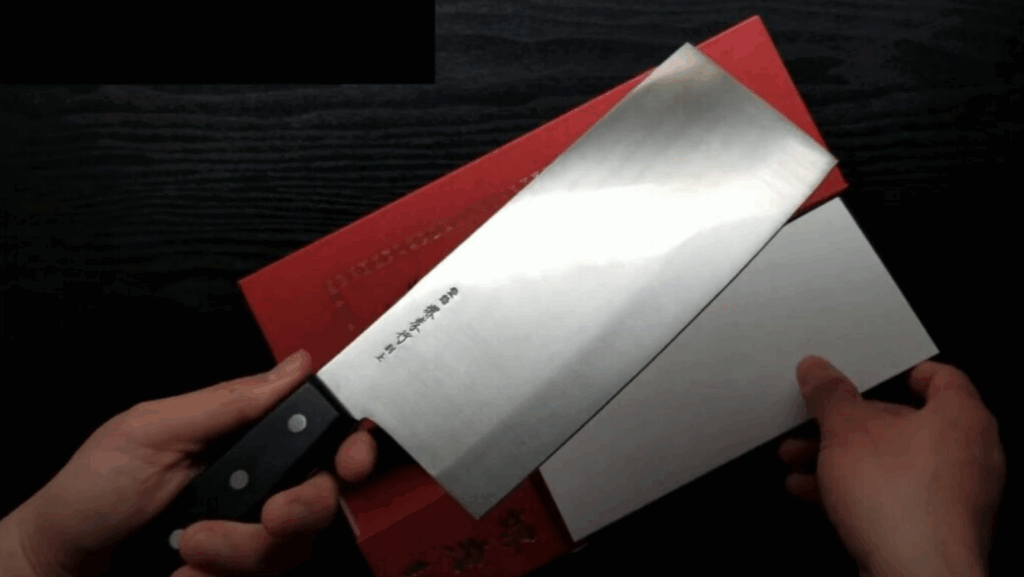
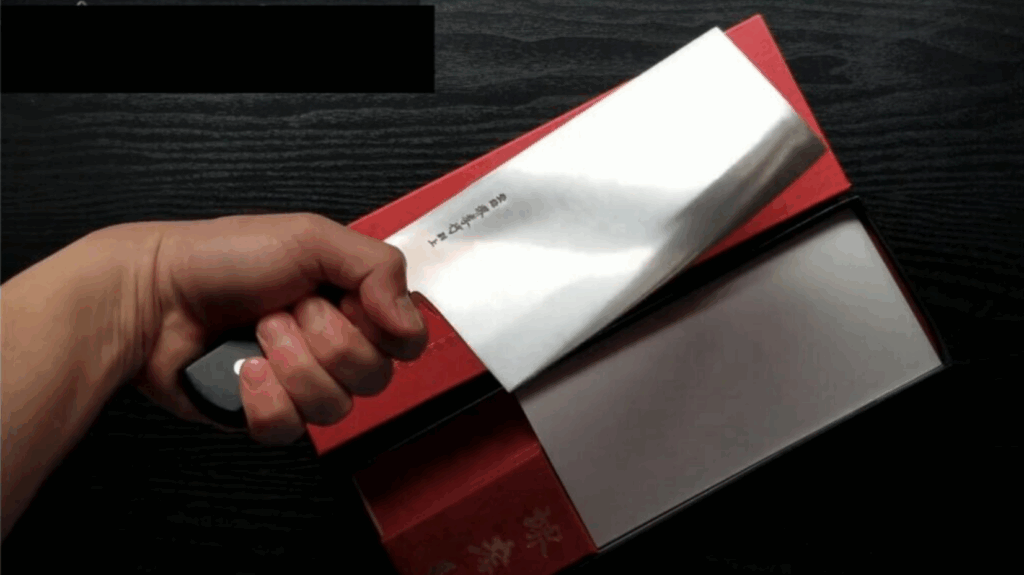
| sharpness ★★★★☆ | Good sharpness with a sense of stability. Because the blade thickness is thin, the blade can easily penetrate into vegetables and meat to get a delicate cut. The special stainless steel blade is not super hard, but it has a smooth cutting edge and is comfortable to push off. The sharpness is satisfactory for a wide range of users, from professionals to home users. |
| Blade Holding Excellent | The moderate hardness of the blade makes it easy to sharpen; it is slightly softer than ultra-hard steels such as VG10, so the sharpness will gradually fade after prolonged use. However, it can be smoothly resharpened with a whetstone, and as long as it is sharpened frequently, it will always maintain a good sharpness. |
| Rust resistance ★★★★★ | Highly corrosion-resistant and safe to handle. The use of special stainless steel makes it highly resistant to rust. As long as it is not left moist, there is no need to worry about rust. Even when cutting acidic foods, it is resistant to discoloration, making it safe to use in professional kitchens. |
| Maintenance ★★★★☆ | Easy to maintain and sturdy. Since it is a combination of a stainless steel blade and a resin handle, simply wash it with detergent and a sponge and wipe it dry after use. Unlike wooden handles, the resin handle can be used without worrying about moisture or mildew. Dishwasher is not recommended due to possible damage to the blade, but the water resistance itself is high. |
| Beauty ★★★★☆ | Simple, practical appearance. The black POM resin handle and silver stainless steel blade are orthodox in appearance, and although the decoration is modest, it has a clean look. The flange makes the joint between the blade and handle look tighter, and the product is carefully finished. Although not spectacular, the quality and solidity typical of professional tools are appealing. |
| Price | 24,000 yen (tax included) 195mm x 85mm, weight 320g 27,800 yen (tax included) 210mm x 95mm, weight 480g 31,400 yen (tax included) 225mm x 110mm, weight 520g |
This series of stainless steel Chinese knives from the Sakai Takayuki brand (Aoki Hamono Seisakusho) uses a special stainless steel that is resistant to rust, as the name “INOX” suggests.
The knives come in a variety of standard sizes, including a lightweight model with a 19.5-cm blade that is easy to handle and weighs about 320 g. Other models include a 210-mm knife (about 480 g), which is easy to handle and weighs about 280 g. Other sizes are available in 210mm (approx. 480g) and 225mm (approx. 520g), allowing you to choose according to your use and preference.
The blade thickness is thin, making this thin-blade type suitable for slicing soft foods, vegetables, and meat. The blade is all stainless steel, rust-resistant, and has a flange (mouthpiece) for hygienic and durable construction.
The handle is attached to a black handle made of POM resin, which is resistant to water damage and impact, and has specifications for tough use in professional use. Overall, this is a Chinese knife for professionals with an emphasis on practicality and durability.
When you pick it up, you will feel at ease with its standard silhouette, as if it were a Chinese knife. The blade length is about 210mm (mine is a 21cm model), the blade width is about 95mm, and the weight is just under 500g, which is a good weight balance. The blade is made of special stainless steel containing molybdenum (so-called “INOX steel”), a medium-hard steel that is resistant to rust and easy to resharpen.
In fact, it seems that the blade is carefully sharpened one by one by a craftsman at the factory, and it sharpened well right out of the box (all Sakai Kohyo knives are honed to perfection, if you ask me). I tried using this knife in a Chinese restaurant for all-round use, from vegetables to meat, and was impressed by its solid sharpness and ease of use.
First of all, when cutting vegetables, I do not feel any stress in daily-use preparations such as chopping cabbage into chunks and peppers into thin strips. The blade thickness is about medium, so even fine shredding can be done rather smoothly. When cutting carrots into thin strips, the blade tip did not jam or bounce in the middle of the cut, and the chopping continued in a steady rhythm. The cross section is smooth enough, and the sharpness is such that the moisture from the vegetable oozes out. Thanks to its weight, the blade is stable on the cutting board, making it easy to make rhythmic thumping cuts. Other knives are too light and the blade tends to bounce, but this Sakai Takayuki Inox is moderately heavy and hits the cutting board with a small thump, giving you a pleasant sensation of rhythmic chopping. The sturdy plywood handle with a flange (mouthpiece) is easy to grip and soft against the hand even after prolonged use.
The handle and blade have a tight fit, so there is no gap between the handle and the blade, making it hygienic and safe to use. Even when I used it roughly, there was no loosening of the handle or blurring of the blade, and it was the most reliable work tool I have ever used.
The sharpness is just the right balance of not too sharp and not too dull, and it has the nostalgia of being able to handle any kind of material. For example, even in simple tasks such as chopping chives or green onions, the blade tip goes straight down without blurring, so the finished product is beautifully aligned. The cross section of the green onion is well moistened, and the green part can be cut in a standing position without being crushed, so the aroma stands out when used as a condiment. Even when cutting hard foods, such as pumpkin for miso soup, if you put the tip in and push it with the center of gravity, it will cut the pumpkin in half stably. Because the blade is of medium thickness, the cross section of the pumpkin is a bit angular, but this is more suitable for use in simmered dishes, as it allows the flavor to soak in. As I used the knife over time, there were times when I felt that the sharpness had become dull, but thanks to the medium-hardness stainless steel, it is not difficult to resharpen the blade with a whetstone. After a few minutes of sharpening, the sharpness of the blade was restored and I was able to return to work. The toughness of the blade, which can be easily rebuilt even after daily heavy use, makes it truly a professional tool.
No. 2: Sugimoto Cutlery No. 6 Chinese knife
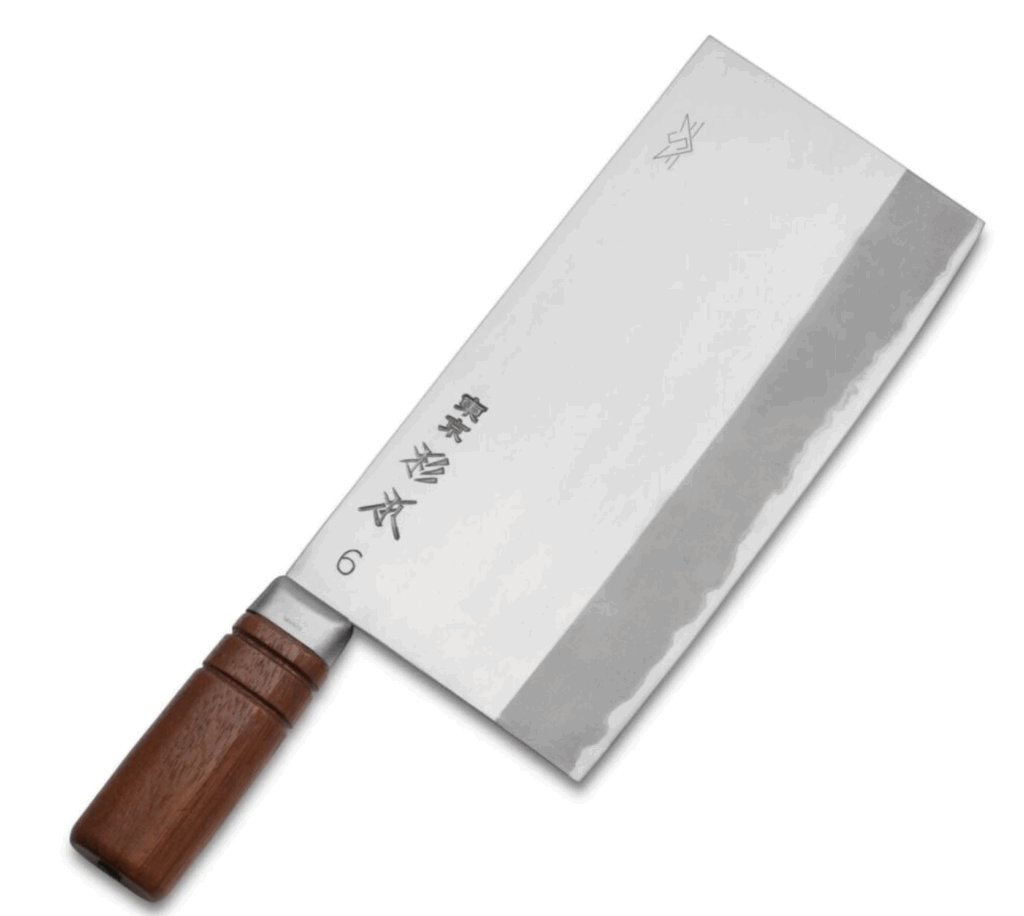
| Sharpness ★★★★★ | Exceptional sharpness. The sharpness of Shiragami No. 2 steel, combined with the craftsman’s blade-attaching technique, gives this knife an unrivaled sharpness. The weight of the knife is used to push the blade through the onion to cut it without crushing the fibers, and even soft foods such as tofu can be cut beautifully without crushing them. |
| Blade Holding ★★★★☆ | VG-MAX has a high hardness (approx. HRC61), which prevents the blade from spilling and keeps its sharpness for daily food cutting. In fact, the manufacturer claims that “the sharpness lasts for a long time,” and it is my impression that the blade does not dull easily even after long hours of preparation work. If necessary, the blade can be resharpened with a whetstone to restore its original sharpness. |
| Rust resistance ★☆☆☆☆ | Attention to rust is essential. Since high-purity carbon steel is used, it rusts very easily. If left wet, red rust may float on the cutting edge in a short time. Prompt cleaning and drying are required, especially after cutting acidic food. |
| Maintenance ★★★★☆ | It takes a lot of time and effort, but it responds. Because the steel rusts easily, immediate cleaning and drying after use is essential. It is suitable for those who do not mind daily sharpening and frequent maintenance, but if you take good care of it, you can use it for decades. Sharpening itself is very easy because the steel is “straight” and it is easy to sharpen the blade as desired. |
| Beauty ★★★★ | The style that dwells in the quality and soundness of the blade. The simple silver blade and black handle of this traditional Chinese knife is a sign of the craftsmanship of the artisan. The more you use it, the more the blade develops a unique texture, and the more it gains an austere charm that can be called a chef’s medal. Even when new, the blade has a high quality luster, giving it an air of “authenticity. |
| Price | 60,500 yen (including tax) 220mm x 110mm |
This is a “No. 6” thin Chinese knife by Sugimoto Cutlery, which is said to be synonymous with Chinese knives. It is made of Yasugi steel and Shiragami No. 2 steel, and has a traditional structure of hard steel sandwiched between soft iron.
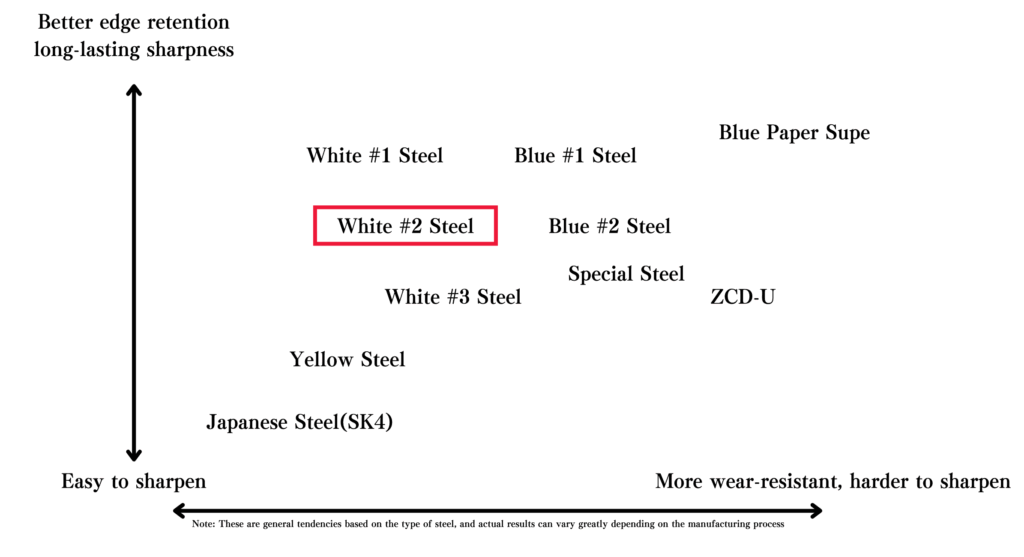
With a blade length of approximately 220 mm, a blade width of 110 mm, a back thickness of approximately 3.0 mm, and a weight of approximately 430 g, it is a well-balanced size despite its large size. The thin-blade type is mainly suitable for cutting vegetables, soft meats, and appetizers, and has long been used by professional chefs for its outstanding sharpness.
Sugimoto’s Chinese knives are forged and polished one by one by craftsmen, and the material of steel sandwiched between steel is painstakingly beaten and extended to form the knife, which has earned a very high reputation for both sharpness and durability.
The steel inside the blade is half the height of the blade width, and is designed to continue to produce steel for many years even after it is sharpened down, making it a knife that will last a lifetime. However, because it is high-purity carbon steel, it is prone to rust, so care (cleaning and drying) after use is essential. Because of its thin blade and high hardness, this knife is not suitable for pounding through meat on the bone or frozen foods, and care should be taken when using it in such ways, as the blade may spill or break.
The Sugimoto Cutlery Chinese Kitchen Knife No. 6 (Roku-go) is a legendary piece in the world of Chinese kitchen knives. Even among professionals, it is known as “Sugimoto when it comes to Chinese knives,” and I myself have admired it since my training days. When I first held it in my hands, I was shocked by its surprisingly thin blade (blade thickness: approx. 3.3 mm) and light weight (approx. 430 g). Even for a Chinese knife of the same 220mm x 110mm size, the Sugimoto No. 6 feels one size lighter than the Fujijiro Atsuha or Jikko Ginzo, which weigh around 500 grams. The blade is made of high-purity Shiragami No. 2 steel (carbon steel), and the ultimate sharpness obtained in exchange for the ease of rusting is truly exceptional. In fact, the bite you feel the moment you pick up the knife is similar to that of a finely honed Japanese kitchen knife, and when I tested it against a newspaper, the weight of the blade alone cut right through it.
I am in love with the performance of the Sugimoto No. 6, but at the same time I am acutely aware of the delicacy of its handling. Because it is a high-purity carbon steel, if left even slightly damp, a thin layer of rust will quickly appear. In fact, after chopping a large amount of onions, I was alarmed when a faint reddish-black reaction began to appear on the edge of the blade after just a few minutes of leaving it for a few minutes without rinsing. It is sensitive to acid, which can affect the flavor and color of some foods you cut. For example, when cutting onions, the cross section may turn slightly brownish, which is due to the reaction of the iron in the blade. When cutting pickled vegetables (pickles), it is essential to work quickly and wipe off the blade immediately to prevent the metallic smell from transferring to the cut end.
No. 3: Shun Classic Chinese knife 175 mm
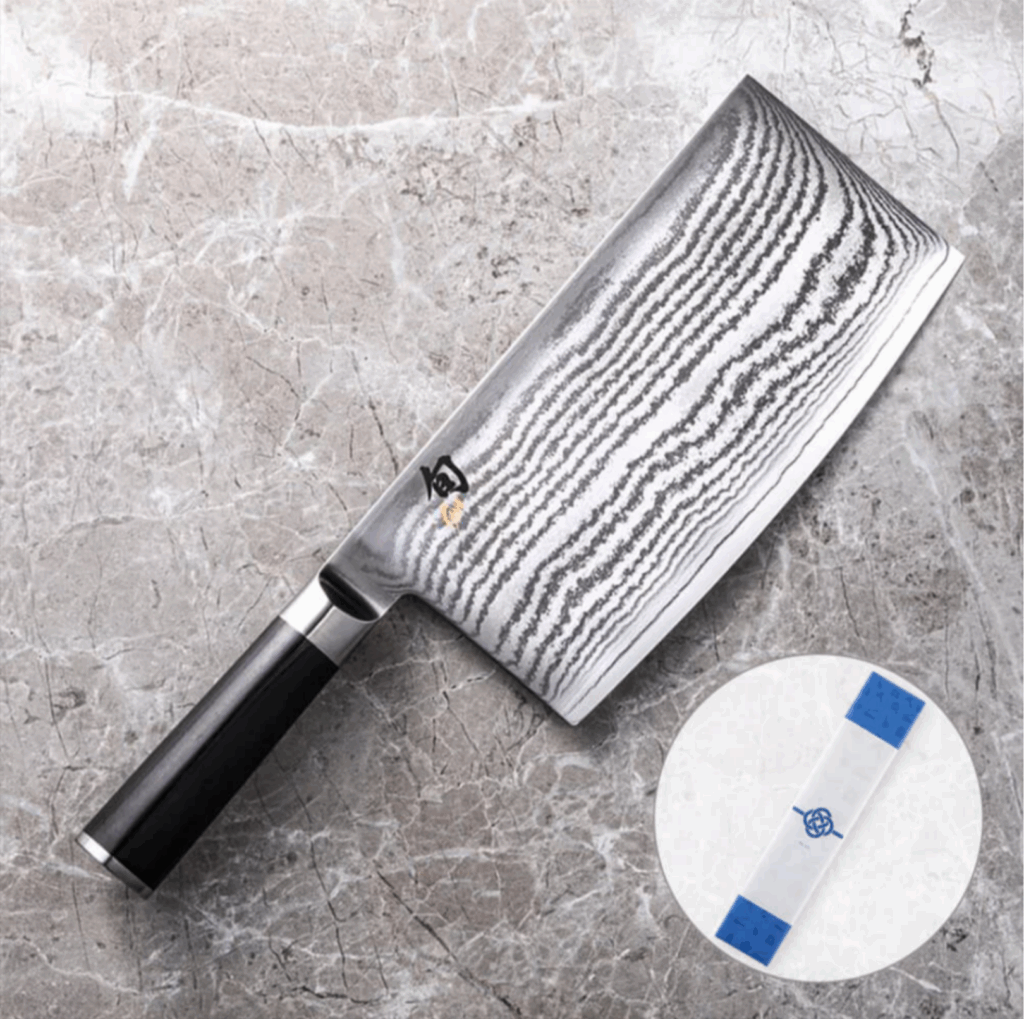
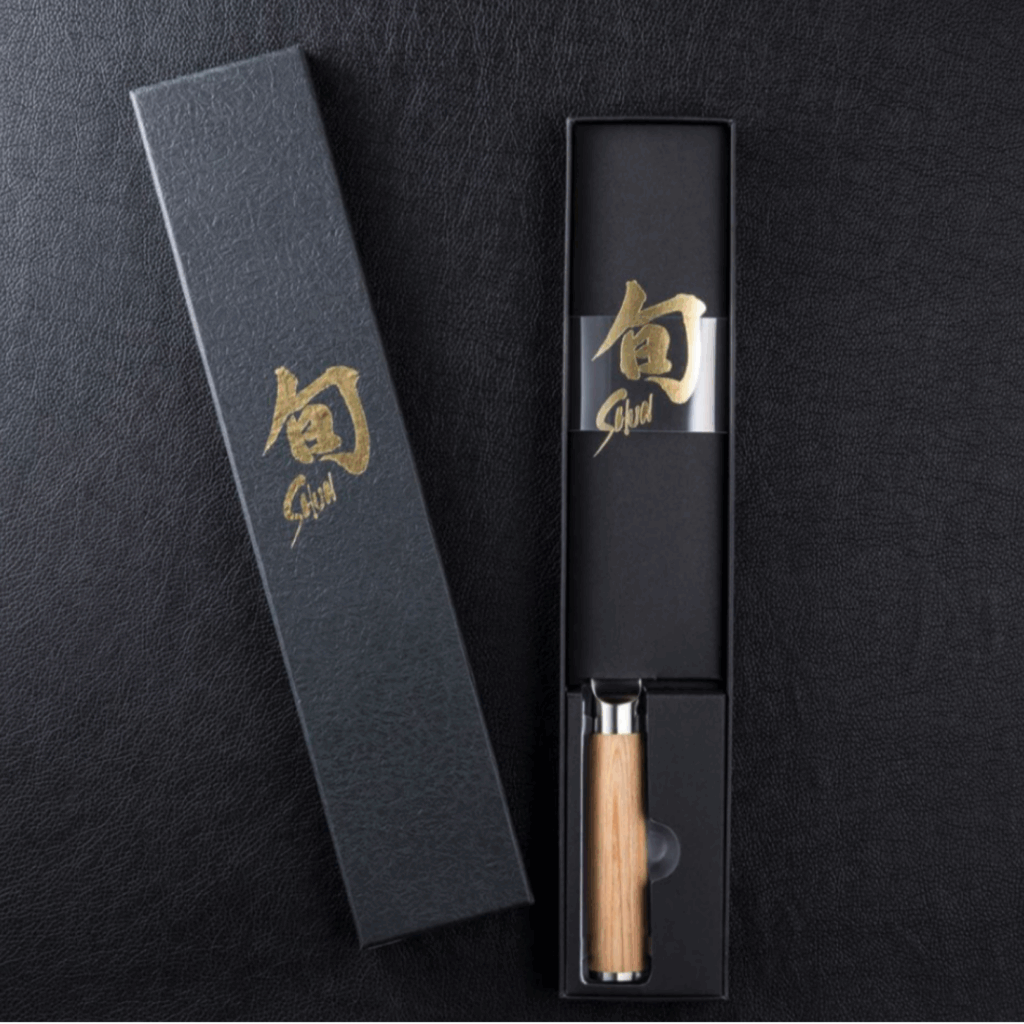
| Sharpness ★★★★☆ | Very sharp cutting edge. The edge of the blade, which has been cut with craftsman’s skill, is as sharp as a Japanese sword, and can smoothly cut everything from thin slices of tomatoes to chunks of Chinese cabbage. Thanks to the high hardness VG-MAX steel core, the cutting edge wears less and the initial sharpness lasts longer. |
| Blade holding ★★★★★ | Long-lasting sharpness: The high hardness of VG-MAX steel (approx. HRC61) prevents the blade from spilling and keeps it sharp for everyday food cutting. In fact, the manufacturer claims that the sharpness of the blade will last for a long time, and it is my impression that the blade does not dull easily even after long hours of preparation work. If necessary, the blade can be resharpened with a whetstone to restore its original sharpness. |
| Rust resistance ★★★★★ | Very high corrosion resistance. The blade is made of three layers of special stainless steel, and the core is made of stainless steel material, making it resistant to rust. If the blade is washed normally and wiped dry after cooking, there is almost no need to worry about rust, and the Damascus pattern will remain beautiful. Even in a slightly humid environment, it is resistant to rust, giving you the peace of mind that only stainless steel can provide. |
| Maintenance ★★★★☆ | Basic maintenance is all that is required for this stainless steel knife: wash it with a sponge and mild detergent after use, wipe it dry, and store it in a dry place. The wooden handle is also made of laminated tempered wood and is water-resistant, but to keep it beautiful for a long time, you should avoid using a dishwasher and thoroughly wash and dry it by hand. Also, avoid cutting hard bones and frozen foods to prevent blade spills and ensure long and comfortable use. |
| Beauty ★★★★★ | The design combines functional beauty with a sense of luxury. The Damascus pattern of about 30 layers is as beautiful as wood grain and has a unique style as if it were a fusion of Japanese and Chinese kitchen knives. The black D-shaped handle and the stainless steel mouthpiece and butt end are in harmony with each other, giving it a presence that makes you want to show it off not only in the kitchen, but also on the tabletop as it is. The design, which combines traditional beauty and modernity, is not only a chef’s tool, but also a beauty worthy of appreciation. |
| Price 175mm x 89mm | 33,000 yen (tax included) |
The Shun Classic Chinese knife is a high-end product offered by Kaijirushi, which is famous for its Sekisoroku brand. It is finished in Damascus specification with a vivid appearance. The core material used is VG-MAX.
VG-MAX is a type of high-quality stainless steel mainly used for kitchen knives, and is known as a steel material with improvements based on VG-10.
VG-10 is widely known as a stainless steel blade steel with an excellent balance of sharpness, rust resistance, and sharpenability, and VG-MAX is a steel based on VG-10, with the content of carbon, cobalt, and tungsten (W) adjusted to further improve its hardness, toughness, and wear resistance.
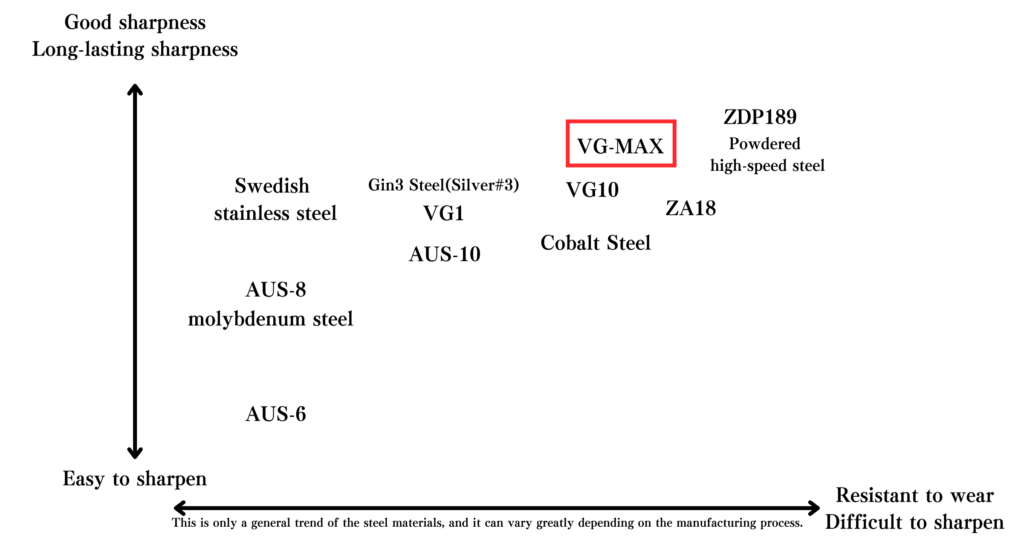
It can be said to be the strongest Chinese knife that combines good looks, sharpness, edge retention, and rust resistance.
When I tested this Shun Classic Chinese knife (175 mm) in preparing Japanese food, I was amazed at its sharpness. With a blade length of 175 mm, the compactness of this knife makes it feel as if you are controlling a large vegetable cutting knife. When cutting cabbage into thin strips, the thin blade goes right in, and each piece is light and fluffy, as if it contains air. In fact, even a large cabbage was easily cut with just the weight of the knife and the sharp edge of the blade, and there was no need to put any effort into crushing the cabbage. Carrots and daikon radishes also have a smooth cross-section and retain their moisture well, so they look fresh when made into salads. The crispness of the vegetables stands out because the cells of the ingredients can be cut without crushing them, and the sharpness of the blade is useful even for professional use.
This seasonal Chinese knife was a great help in delicate tasks such as preparing fish and meat. For example, when shaving chicken thighs, a simple pull is enough to cut cleanly through to the muscle. The blade is so smooth that the cross section looks as if it had been cut with a sashimi knife, and the surface where the meat fibers have been cut shines brightly. Thanks to this, the meat is cooked evenly, and even in stir-frying, the meat is juicy and not tough. It is no wonder that this knife is said to be a ” favorite of professionals.” In fact, I feel that this knife is an all-around player that can handle everything from vegetables to meat. The wide blade is especially useful for scooping up chopped ingredients and transferring them to a pan, and it speeds up the transfer of ingredients from the cutting board. It is also useful in the field of Chinese cooking, as garlic can be easily crushed by placing the flat side of the blade against it and giving it a push.
No. 4: TOJIRO PRO Chinese 220mm
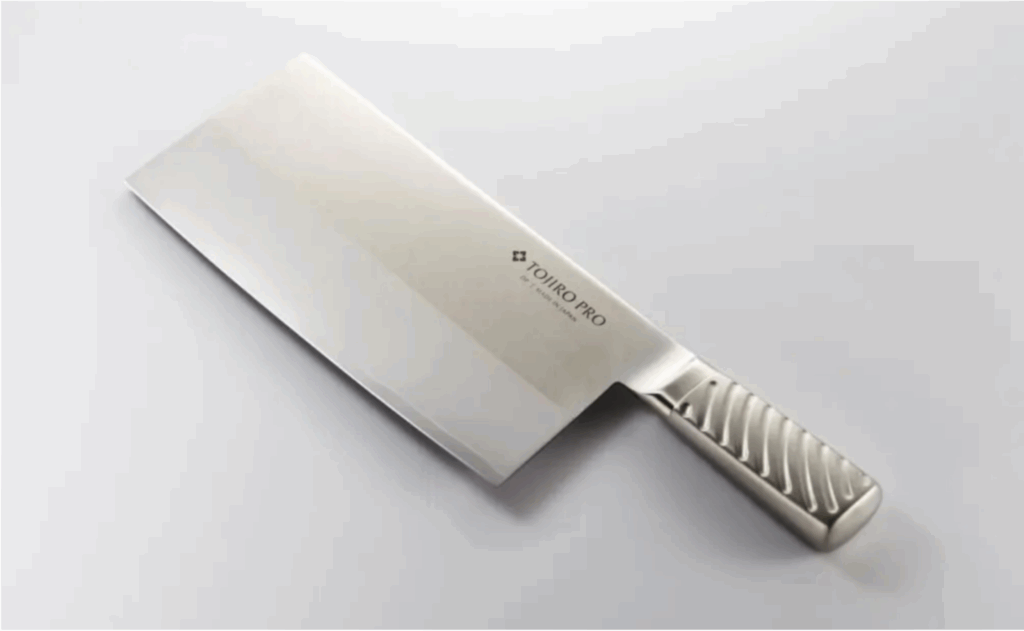
| Sharpness ★★★★☆ | Professional sharpness: The VG10 steel blade is sharpened at the factory and can cut even paper-thin ingredients right out of the box. Even hard foods have a sense of smooth blade penetration, and the sharpness is at a level that is reliable enough for professional use. From chopping vegetables to cutting thinly sliced meat, the sharpness of the blade with little snagging improves work efficiency. |
| Blade Holding ★★★★★ | Excellent durability due to high hardness steel. The core material, VG10, is extremely resistant to abrasion as a blade steel, and even after long hours of continuous use, the sharpness of the blade deteriorates slowly. Its high hardness of around HRC60 reduces the frequency of resharpening even with daily heavy use. The blade is resistant to spills even when used to chop heavy foods, making it tough enough to withstand the rigors of professional use. |
| Rust resistance ★★★★★ | Full stainless steel and rust-free: VG10 itself is made of stainless steel, and its all-stainless steel construction, including the sides of the blade and handle, makes it extremely resistant to rust. There is no need to worry about rust unless under extreme conditions such as leaving the blade wet, and discoloration and rust formation are unlikely to occur even when cutting highly acidic foods. |
| Maintenance ★★★★☆ | Hassle-free maintenance. Since it is made of all stainless steel, it can be washed with detergent after use and kept clean by simply wiping it dry. Another advantage is that it is not too hard, so it is easy to resharpen and can be sharpened relatively smoothly with an appropriate whetstone. |
| Beauty Excellent | Modern and clean design. The silver luster of the all stainless steel and the tornado pattern on the surface of the handle are distinctive, giving it a modern beauty. The seamless one-piece construction looks clean and professional. Although it does not have the glamour of a Japanese knife, it is stylish with a sense of functional beauty. |
| Price (220mmmm) | 26,400 yen (including tax) |
Tojiro Corporation (Tojiro) is a well-established company that manufactures and sells kitchen knives and cutlery products, with its headquarters in Tsubame City, Niigata Prefecture, Japan.
Since its establishment in 1953, the company has evolved its kitchen knife manufacturing while respecting high technology and tradition in the production of cutlery.
The steel used in TOJIRO PRO Chinese knives is VG10, which has a core made of VG10 and a side made of 13 chrome stainless steel, making it both sharp for professional use and easy to clean.
As mentioned earlier in the explanation of VG-MAX, VG10 is a well-balanced steel in terms of sharpness, blade durability, rust resistance, and ease of sharpening, and is loved by professionals. The price is not too expensive, which is another point we can recommend.
The TOJIRO PRO Chinese 220mm (F-630) by Tojiro surprised me with its hefty weight the moment I first held it. With an overall length of 330 mm and a blade length of 220 mm, it is a heavyweight knife weighing approximately 520 g. It is the embodiment of the truism that “a Chinese knife is also a weapon by its weight. In fact, this weight was of great use in preparing stir-fried vegetables with pork chashu , which is stir-fried in a wok. When slicing a block of pork shoulder into thick slices against the fibers, the weight of the knife can be used to rhythmically slice off with a thump. Since the blade proceeds to push and break the food without any extra effort, the stability of the knife is excellent even when cooking something that requires vigorous pounding through the entire bone. As an experiment, we applied the blade to a joint of a chicken wing and found that the blade was able to cut the joint without the need to strike it with a hammer. The cut surface was not as smooth as that of a thin-blade knife, but the meat fibers were not crushed too much, even though it was cut through to the bone. Thanks to the inertia created by the weight, even hard carrots and burdocks can be cut with a feeling of **”just press the blade against it “**, which is reassuring, as if you were using a professional slicer.
As I used this TOJIRO PRO Chinese knife more and more, I was amazed at how well it held its edge. Once sharpened, the sharpness of the blade shows little sign of dulling even after slicing a large amount of food in the course of my work. In fact, even after chopping dozens of green onions and slicing cabbage into strips, the edge remained almost intact and sharp enough to cut through paper. This is the benefit of the VG10 steel, which has a hardness of around 60, and it is a great help in a busy kitchen because it cuts long and is rust-resistant, reducing the frequency of resharpening.
No. 5: [Silver#3] Chinese knife
![[GinSan] Chinese knife](https://media.sakurajapaneseknife.com/us/en/wp-content/uploads/2025/11/スクリーンショット-2025-11-20-1.58.55.png)
![[GinSan] Chinese knife](https://media.sakurajapaneseknife.com/us/en/wp-content/uploads/2025/11/スクリーンショット-2025-11-20-1.59.03.png)
| sharpness ★★★★ | Sharpness rivaling carbon steel. The blade of Ginzo steel can be sharpened very sharply, and the sharpness of the cutting edge is comparable to that of Japanese kitchen knives made of white or blue steel. Because our craftsmen perform the main blade sharpening before shipping, you will experience an amazingly smooth sharpness from the moment you receive the knife in your hand. |
| Blade Holding ★★★★☆ | High hardness but well-balanced sustainability. Ginzan steel is hard enough, with a hardness of around HRC60, to maintain sharpness for a long time when cutting everyday foodstuffs. Although its abrasion resistance is not as high as that of powder steel, it can be expected to hold a blade at the same level as carbon steel, and can be used semi-permanently if properly resharpened. |
| Rust resistance ★★★★★ | High rust resistance unique to stainless steel. As the name suggests, Ginzo steel is a stainless steel-based blade steel called “Ginshi,” which is extremely resistant to rust. As long as it is properly cleaned and dried after use, red rust is unlikely to occur. |
| Maintenance ★★★★☆ | Easier than carbon steel and lasts longer with proper care. Daily care is relatively easy with stainless steel knives. If you are using a Japanese wood handle, just be careful of extreme humidity and dryness and you should be fine. When the blade becomes dull, sharpening with a whetstone will easily restore sharpness. |
| Beauty ★★★★☆ | The style of a traditional craft. The beauty created by the mirror-finished blade surface and the Japanese-style high-grade wooden handle is exceptional. The blade pattern unique to forged kitchen knives is austere and has both gorgeousness and dignity. |
| Price 220mm x 110mm | 89,540 yen (including tax) |
In second place is a Chinese knife from Jikko Cutlery. Jitsukoh Cutlery is a cutlery shop based in Sakai that produces a large number of professional-grade kitchen knives.
As the name suggests, GINZAN Chinese knives are made of GINJIGAMI No. 3 steel, which is a well-balanced stainless steel that is highly valued by professionals.
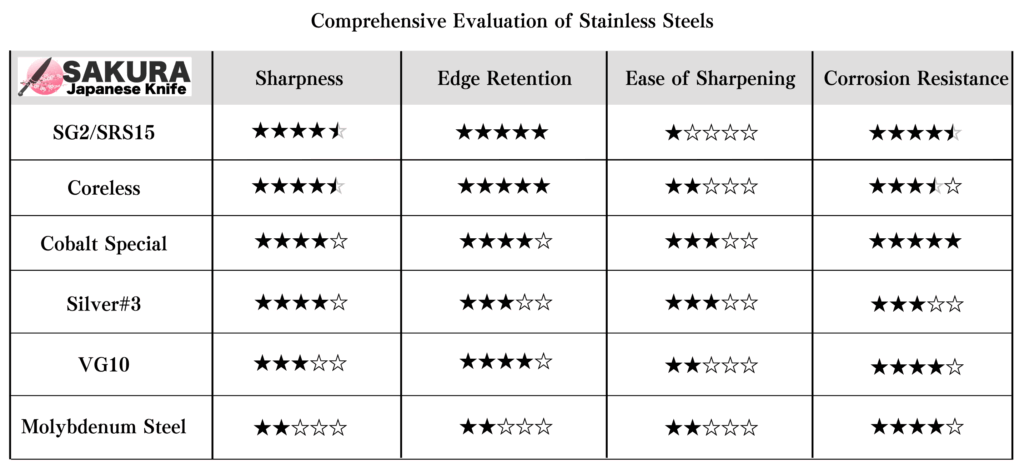
It is a knife that can be recommended to professionals in terms of its good balance, but its high price is a drawback.
The craftsmanship of this piece shines through from its beautiful base metal and imposing style. It feels solid and stable in the hand, and while the size is standard at 220 mm (blade length) x 110 mm (blade width), it weighs about 520 grams, which gives it a solid weight. The first thing that surprised us was that the edge of the blade was smooth like a mirror surface and sharp enough to easily push through paper, probably because the craftsman has been applying the blade to the blade since it was purchased. In fact, when I tried cutting thick Chinese cabbage, the blade went in as lightly as if I was peeling a laurel leaf with a thin-blade knife. It is a three-piece kitchen knife made of a stainless steel called GINJIGAMI No. 3 (GINZAN), which is claimed to have a sharpness approaching that of carbon steel despite being stainless steel, and it is no wonder that this is the advertising claim. Even soft vegetables such as tomatoes and eggplants could be cut without crushing them, and the cut was so clean that the cloudy surface of the knife was reflected on the cross section. The feature of Ginzo steel is that it is resistant to rust and easy to sharpen, and the feeling of the knife on the whetstone is pleasant and crisp, giving the impression that the blade is attached in a short time. In fact, when I cut a piece of newspaper after sharpening, it sliced through without getting stuck, and I felt that the ease of sharpening and sharpness of the blade is to the liking of professionals.
The more I used the Ginzo Chinese knife, the more its high-quality construction became familiar to my hand. The handle is Japanese style with an octagonal ebony style wooden handle and a buffalo horn style muzzle, which is both luxurious and practical (you can choose the handle material and muzzle as an option). My knife has an ebony handle with a buffalo horn muzzle, which fits well when gripped, and allows me to control the heavy blade well. The balance of the knife’s center of gravity is designed to be closer to the blade, so that when you insert the blade into the food, the tip of the blade naturally moves down. This allows the user to cut food using gravity and the weight of the blade, which reduces the strain on the arm even when working for long periods of time. In fact, even when shredding large quantities of cabbage or slicing onions, the weight of the blade seems to do the job on its own, and I simply control the direction in which the blade is traveling. A sign of knife sharpening is that the crispness decreases as the sharpness dulls, but this Ginzo is less likely to show such signs, and I am impressed that the edge holds up well into the evening.
Conclusion
Chinese knives, with their wide blade and multi-functionality, are useful in a variety of applications in Chinese cooking, such as cutting, mashing, and scooping up ingredients.
In particular, Kaijirushi’s “Shun Classic Chinese Knife 175mm” has a beautiful Damascus pattern and is made of high-quality VG-MAX steel for excellent sharpness and durability.
In addition, the TOJIRO PRO Chinese 220mm from Tojiro is a professional-grade knife made of VG10 steel, which is highly regarded for its rust resistance and maintainability.
These knives are excellent products that can be recommended to a wide range of users, from professional cooks to home cooking enthusiasts.

Comments